When the Past Will Not Stay Past: Understanding Trauma and PTSD in Pakistan
Some experiences do not leave the body when they end. They keep the nervous system organised around them for months or years after the event itself is over. The person who has been through such an experience often describes the same things: a difficulty trusting that the worst is behind them, sleep broken by dreams they cannot quite remember on waking, a heart that quickens at unrelated sounds, a numbness that comes and goes, a sense of being present-but-not-present in their own life. They will sometimes say they feel as if part of them is still in the past, watching it happen, even when their hands and feet are clearly in the present.
This is what trauma does. It is not weakness, and it is not exaggeration. It is a real, measurable, neurobiological response to an experience that overwhelmed the system's capacity to process it at the time. And in Pakistan, the recent clinical data suggests it is more widespread than most people realise.
A 2024 study of trauma-exposed Pakistani adults found that 34.81% met the criteria for full post-traumatic stress disorder, the highest single category in the study. The most common form of trauma exposure was domestic violence, followed by terrorism-related trauma and natural disasters.
This article is for the person carrying something like this, or for someone who loves them. I want to tell you what trauma actually is, why ordinary talking advice often does not help, what proper treatment looks like, and how to begin.
What trauma actually is, in the brain and the body
The human nervous system has a brilliant emergency response for genuine danger. When the brain perceives a serious threat, several systems activate simultaneously: stress hormones flood the body, heart rate accelerates, the muscles prepare for fight or flight, attention narrows to the threat, and the parts of the brain responsible for laying down ordinary, contextualised memory partly shut down. In their place, the system makes a different kind of record: a fragmentary, sensory, intensely felt impression designed to recognise the same danger if it ever appears again.
This system saved our ancestors many times. It is also what produces post-traumatic stress when the experience was severe enough to overwhelm ordinary processing.
In ordinary memory, an event has a beginning, a middle, and an end. You can tell the story of it, and the telling is itself an act of putting it in the past. In traumatic memory, the event is stored differently. It does not have a clean beginning or end. It is encoded as sensations (a smell, a quality of light, a tone of voice), and these sensations remain wired to the alarm system. When something in the present triggers one of these sensations, even something the conscious mind does not register, the alarm fires as if the original event were happening now. The body responds accordingly: racing heart, sweat, the urge to escape, a sense of dread that has no obvious source.
This is what flashbacks are. This is what panic attacks in trauma survivors often are. This is why anniversaries are difficult, why certain places or times of day are difficult, why intimate moments can suddenly feel unbearable. The brain is not malfunctioning. It is doing precisely what it was designed to do, in response to a memory that has never been allowed to finish.
Real trauma recovery is not about forgetting the event. It is about helping the brain re-encode it as something that happened and is now over. This is specific clinical work, and it is what proper trauma therapy does.
The forms trauma takes in Pakistan today
The forms differ from country to country in their specifics, but the underlying neurobiology is the same. In our practice we see, broadly:
Domestic violence and abuse. The largest single category in the data, and the one that is most often hidden, because the cultural pressure to keep family matters private is enormous. Survivors of long-term domestic abuse often carry complex trauma, which is different from a single-incident PTSD: the nervous system has adapted to chronic threat, and the recovery work is correspondingly longer and more careful.
Single traumatic incidents. Accidents, violent crime, the sudden loss of a loved one, a frightening medical event, an assault. These often produce classical PTSD presentations: intrusive memories, avoidance, alarm hyperactivity, and emotional numbing.
Trauma in healthcare settings. Patients who have survived serious illness, painful surgeries, the loss of a child in pregnancy or shortly after birth, or who have witnessed the death of a family member in a hospital, often carry trauma that medical care itself has done nothing to acknowledge.
Childhood adversity. A significant proportion of the adult patients we see for what looks like anxiety, depression, or relationship difficulties are in fact carrying the long aftermath of difficult childhoods. This may or may not meet the formal diagnosis of PTSD, but the mechanism is the same and the treatment principles are similar.
Collective trauma. Pakistanis have collectively lived through years of political instability, terrorism, climate disasters, and economic disruption. For many adults, trauma is not a single discrete event but a sustained background of difficulty.
Whichever form you carry, the principles of healing are the same, and they are well-understood.
Why ordinary advice does not help
Most people who carry trauma have, at some point, been told the same set of things: that they should move on, that other people have it worse, that they should be grateful for what they have, that talking about it will only keep it alive, that time heals everything.
These pieces of advice, however well-intentioned, miss something important. Trauma is not a thought or a memory in the ordinary sense. You cannot "choose" to move past it any more than you can choose to stop being nearsighted. The neural pattern is real and physical. It does not respond to reasoning. It does not respond to willpower. It responds to specific treatment that does the actual work of helping the brain re-encode the memory.
This is why trauma-specific therapy exists, and why it is so different from ordinary supportive counselling. Talking about difficult experiences with a sympathetic listener can be soothing and is sometimes helpful, but it does not, on its own, reliably treat post-traumatic stress. Specific clinical methods are required.
How trauma is properly treated
There are several evidence-based approaches with strong research support, each suited to different patients and situations.
Trauma-focused cognitive-behavioural therapy helps the patient examine the thoughts and meanings that have attached to the traumatic event (often including self-blame, distorted beliefs about safety, and assumptions about others), and gradually re-process the experience in a structured way.
Eye Movement Desensitisation and Reprocessing (EMDR) is one of the better-evidenced trauma therapies available, and it works through a specific protocol that helps the brain re-process traumatic memories with the help of bilateral stimulation (eye movements, sounds, or taps). For single-incident traumas in particular, the results are often striking.
Somatic approaches address trauma's hold on the body directly, working with the nervous system's regulation rather than only with thoughts and memories. Many trauma survivors find that their symptoms live more in the body than in the mind, and that purely talk-based therapies do not reach the level where the work needs to happen.
Stabilisation work comes first, always, before any deep trauma processing. A patient whose nervous system is in chronic alarm cannot safely re-process a major memory until they have the capacity to manage the intensity. This is non-negotiable in proper trauma care, and is sometimes what is missing in less experienced practice.
Pharmacological support in collaboration with a psychiatrist is appropriate in some cases, particularly where sleep is severely disrupted or where co-existing anxiety or depression is severe enough to interfere with therapy.
How I approach trauma in the clinic
My training is in clinical psychology, with additional training in homoeopathic medical sciences and a research interest in the meaning response. Trauma work is some of the most delicate clinical practice in mental health, and I approach it with corresponding care.
The first conversation is unhurried and deliberately unpressured. I will not ask a patient to describe their traumatic experience in the first session unless they specifically wish to. The first task is to understand, in broad terms, what is being carried, what the current symptoms are, and what kind of support the person feels they need. Many trauma survivors have been pushed into telling their story too soon by previous counsellors, and the harm of this is real.
The early phase of treatment focuses on stabilisation: helping the patient restore basic capacities (sleep, eating, daily function), learn specific techniques to regulate the nervous system when symptoms rise, and re-establish a sense of safety in their daily life. This is not delaying the "real work." This is the real work, and it is the foundation on which everything else can happen.
The middle phase, when stability is sufficient, involves whatever specific trauma-processing approach is right for that patient and that experience. This is done at the patient's pace, with careful attention to capacity, and with the patient's full consent at every step.
Throughout, I draw where appropriate on gentle homoeopathic remedies in the early phase to support sleep and ease the most acute symptoms, while the nervous-system work takes hold. This is the layered approach that has come to define our practice. Surface first, depth later.
Where the trauma involves ongoing danger (a survivor still in an abusive situation, for example), safety planning and connection to appropriate resources takes priority over any other clinical work. Healing cannot proceed while the harm is ongoing.
What you can do now, even before therapy
A few things, gently offered. None of these will resolve trauma on their own, but all of them help.
Recognise that what you are carrying is real. The most damaging belief most trauma survivors hold is that they are "making too much of it" or that their reaction is a sign of weakness. Neither is true. The reaction is a sign of having been through something that was too much for your system to process at the time. This is not your fault.
Restore the small foundations. Sleep, food, sunlight, gentle movement. Trauma erodes these. Rebuilding them, even imperfectly, is the ground on which healing happens.
Reduce sources of additional stress where you can. The nervous system needs some room in which to begin recovery, and modern life is generous with inputs that prevent this. Stepping back from news, social media, and other sources of activation is not avoidance. It is direct care.
If you feel safe enough to do so, tell one person. Trauma keeps itself alive partly through secrecy. Saying the words out loud, even imperfectly, to one trusted person, is often the beginning of the end of its isolation.
If you are in danger now, please reach out. There are resources in Pakistan that can help, including women's protection helplines, and there is no shame in using them. Your safety comes first.
A closing thought
I want to say this directly to anyone reading this who has been carrying something for a long time: it does not have to be permanent. Trauma is one of the conditions in clinical practice that responds best to proper treatment, even years or decades after the original event. Patients who finally do this work often describe a quality of relief they had stopped believing was possible. The past does not change. The way the past lives in your body and mind can change a great deal.
You are not weak for carrying this. You are not broken for not having recovered on your own. You are a human nervous system that did exactly what human nervous systems do when they are overwhelmed. The recovery is real, and it is available.
The door of the clinic is open, and the conversation begins with listening. Quietly, and at your pace.
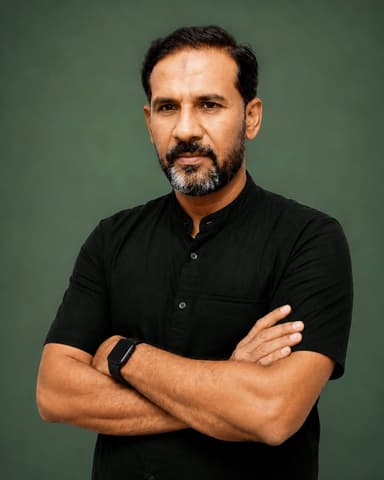
— Dr. Mohammad Zafar Iqbal MPhil Psychology · DHMS · Mind & Meaning Clinic, Lahore
All consultations are private and held in strict confidence. Online consultations are available for patients who prefer them.