When the Marriage Becomes Difficult: A Counsellor's Honest Guide for Pakistani Couples
A marriage rarely fails at the moment a couple finally walks into a clinic. By that point the relationship has usually been struggling, often quietly, for a long time. What brings them in is not a single fight but the slow accumulation of disappointments, the failures of communication that have stopped feeling fixable, the cooling of intimacy, the family pressure that has worn down the patience of one or both partners, and very often the realisation that they no longer know how to talk to each other about the things that matter most.
This article is for couples who recognise themselves in any of that, and also for individuals who suspect their marriage is in trouble but have not yet been able to say so out loud. I want to be honest with you about what makes marriages in Pakistan difficult today, what counselling actually does and does not do, and how to think about whether to seek help.
What is happening to marriages in Pakistan right now
There is a real, observable shift in the kind of marital concerns walking into clinics in Pakistan compared to a generation ago, and it is worth naming clearly because it affects how you should think about your own situation.
In the past, marriages were held together by structure. Extended family, clear gender roles, economic interdependence, and limited alternatives kept couples in place even when individual partners were unhappy. Whether that was good or bad is a separate conversation; what matters here is that the glue was external.
That structural glue has weakened considerably for younger generations of Pakistanis, particularly in urban areas. Nuclear households are more common. Women are economically more independent than they have ever been. Both partners have far more exposure, through social media and television, to alternative models of what marriage can be. Couples now expect, from each other, things they would not have expected a generation ago: emotional companionship, sexual satisfaction, ongoing personal growth, friendship.
This is not a complaint about modern marriage. It is simply the observation that the requirements have risen sharply, while the skills (communication, emotional regulation, conflict resolution) needed to meet those requirements were not taught to most of us by our families of origin. The structural support is weaker, the expectations are higher, and the toolkit is the same or worse than what our parents had. It is not surprising that more marriages now feel difficult.
The four difficulties I see most often
In our clinic, the same four themes appear repeatedly. If your situation fits one or more of these, it is not unusual and it is workable.
Communication has broken down. This is by far the most common presenting issue. The couple has stopped talking about what actually matters, or every attempt to do so dissolves into a fight or a silence that lasts days. Often one partner is the one who tries to raise things and the other shuts down, which leaves both feeling unheard. In Pakistani marriages this pattern is often gendered (the wife wants to talk, the husband withdraws), and it is one of the most consistently studied dynamics in relationship psychology. It is not a personality clash. It is a learnable skill problem, and counselling helps.
In-laws and the extended-family system. A particularly Pakistani difficulty. The marriage is not just between two people; it is between two families, often with strong expectations about how the wife should fit in, how decisions should be made, where the couple should live, how children should be raised. When the husband does not feel able to set respectful boundaries with his own family, or when the wife feels she is being asked to absorb endless pressure, the marriage strains in predictable ways. Counselling here is often less about the couple and more about helping the couple stand together as a unit against the pressures coming from outside.
Sexual intimacy has cooled or never properly began. Two distinct patterns. In some couples, the sexual relationship was never properly established, often because both partners arrived at marriage with very little accurate information and a great deal of anxiety; the early experiences were not what either had hoped, and the issue has been politely avoided ever since. In other couples, intimacy was once good but has faded under the weight of stress, exhaustion, children, or unaddressed resentment elsewhere in the relationship. Both patterns are extremely common, both are addressable, and proper care includes both psychological and where appropriate medical input.
Infidelity, or the suspicion of it. The most painful presentation, and increasingly common. The couple comes in with one of them having had an affair, or a confessed online attachment, or a profound erosion of trust even without a specific incident. This is the most difficult work in relationship counselling, but it is not hopeless. With genuine accountability from the partner who broke the trust and patient, careful work over months, many couples do rebuild. Some do not, and a counsellor's role in those cases is to help both partners understand whether continuation is right for them.
A note specifically for arranged marriages
Many of the couples I see come from arranged marriages, often in the early years where they are still building a relationship that more love-marriage couples will have built before the wedding. There is no shame in this. An arranged marriage is a perfectly legitimate way to start a partnership, and many such marriages become deeply loving over time. But the early phase is genuinely harder because you are doing two things at once: building a relationship and conducting it. Couples who come for premarital or early-marriage counselling often save themselves years of misunderstanding by laying the foundation deliberately rather than hoping it will assemble itself.
What counselling actually does, and what it does not
Marriage counselling, done properly, is not a process in which a therapist tells you who is right and who is wrong. It is also not a process in which the goal is necessarily to "save the marriage" at all costs. Some marriages should continue, some should end, and a good counsellor helps both partners see their situation clearly enough to choose well rather than defaulting into outcomes they will later regret.
What it does do is the following:
It creates a space where both partners can speak without it turning into a fight, because a third person is holding the structure of the conversation. This sounds modest but is genuinely difficult to recreate elsewhere.
It teaches specific communication skills that most of us were never taught. How to raise an issue without an accusation. How to listen without preparing your rebuttal while the other is speaking. How to repair after a fight rather than just letting it scab over.
It identifies the patterns that keep you stuck. Most struggling couples have two or three recurring cycles that produce most of their pain. Naming these patterns clearly is often the first step to changing them.
It addresses the practical questions that arrive in real marriages, such as in-law boundaries, parenting differences, financial conflict, sexual intimacy, the division of household labour, and the specific cultural pressures that shape Pakistani marriages.
It helps each partner do the individual work that makes the relationship better. Often what is wrong in a marriage is not really between the partners; it is something each of them carries individually that is poisoning the shared space. Good couples work includes some individual reflection.
My own approach
Because patients often ask, I will say a word about how I work. My training is in clinical psychology, with additional training in homoeopathic medical sciences and a Diploma in Sexology, and the approach is integrative.
The first session is unhurried, because rushing here causes lasting damage. I want to understand the whole shape of the relationship: how it began, what has changed, what each partner is carrying that the other may not fully know about, and what they each hope a different outcome might look like. Both partners attend together in most cases, though there are situations where individual sessions are appropriate first.
From there, the work is layered. Early sessions usually focus on stopping the bleeding: the most destructive patterns that are doing immediate damage need to be slowed before deeper work can happen. This often involves specific communication tools, simple structured exercises, and sometimes agreements about what to set aside for a period while we work on the underlying dynamics.
The middle phase is where most of the work happens: examining the patterns each partner has brought from their own history, addressing specific issues (in-laws, intimacy, finances, parenting), and rebuilding the foundation of trust and friendship that may have eroded.
Where sexual intimacy is part of the difficulty, I am comfortable working with that directly. Patients are sometimes surprised that this is part of the conversation in a counselling clinic, but for many marriages it is central, and avoiding it solves nothing.
Confidentiality is absolute. What is said in the consulting room stays there.
When to come in, and when not to
Some signs that a marriage would benefit from counselling, drawn from clinical experience and the relationship-psychology literature:
You are having the same fight again and again without resolution.
You feel lonely in the marriage, more than you would alone.
Physical or emotional intimacy has substantially declined.
You find yourself imagining a different life with a frequency that troubles you.
The family environment around the marriage is wearing one or both of you down.
You have been considering separation but have not been able to discuss it openly with each other.
There has been a breach of trust that neither of you has been able to move past.
Counselling is not the right answer in every case. Where there is ongoing domestic violence or abuse, safety must come first, and individual support for the person at risk is the priority. Couples work is not appropriate while a partner is being harmed.
A final word
I want to say this directly to anyone who has read this far: choosing to get help for a marriage is one of the most generous things a person can do for their partner and their family. The cultural pressure in Pakistan is still to handle these things privately, or to involve only family, or to endure. The cost of enduring, in years and in personal cost, is high. Choosing instead to bring in a qualified, neutral, confidential professional is a sign of love, not of failure.
Whatever you are carrying, it is more common than you think, and almost certainly more workable than it feels right now. The door of the clinic is open, and the conversation begins with listening.
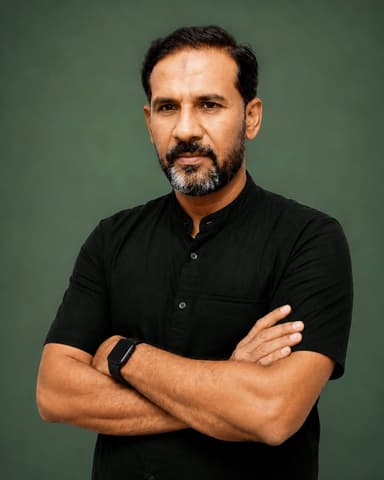
— Dr. Mohammad Zafar Iqbal MPhil Psychology · Diploma in Sexology · DHMS · Mind & Meaning Clinic, Lahore
All consultations are private and held in strict confidence. Online consultations are available for patients who prefer them.