Homoeopathy in the Age of Science: An Honest Account of What It Is, What It Is Not, and Why It Still Helps
Few subjects in medicine generate as much heat and as little light as homoeopathy. Among its practitioners, it is often defended in absolute terms, as if every aspect of Hahnemann's original system from the eighteenth century were beyond question. Among its critics, it is often dismissed in equally absolute terms, as if its long history of helping patients were entirely imaginary. Neither position is honest, and neither serves the person actually trying to decide whether to pursue homoeopathic care for themselves or for someone they love.
I write this as a physician trained in both clinical psychology and homoeopathic medical sciences, with a research interest in the meaning response, which is the modern, rigorous understanding of what was once casually called placebo. My aim here is not to convert anyone in either direction. It is to give you the most accurate, considered account I can of what homoeopathy is, what the evidence actually shows, why it continues to help millions of patients including in our own country, and how to think about it sensibly.
What homoeopathy actually is
Homoeopathy was founded in 1796 by Samuel Hahnemann, a German physician who became disillusioned with the brutal medical practices of his era — bloodletting, purging, and heavy metal poisoning passed off as treatment. He proposed an alternative system built on two principles.
The first is similia similibus curentur, "like cures like" — the idea that a substance which produces certain symptoms in a healthy person can, in a very diluted form, help relieve those same symptoms in someone unwell.
The second is the use of extremely diluted preparations of those substances, sometimes diluted to the point where, by the chemistry we know, almost none of the original substance remains. Hahnemann believed that the dilution and shaking, what he called potentisation, transferred some quality of the substance to the carrier medium, water or alcohol.
Around this Hahnemann built an extraordinary clinical practice. He observed his patients carefully, recorded their entire constitutions, asked about emotional and mental states alongside physical symptoms, and matched a remedy to the whole pattern of the person rather than just the disease. This was, in its time, a humane and patient-centred medicine.
The honest scientific position
Here I have to be direct, because dishonest defences of homoeopathy do more damage to the field than honest engagement with its limits.
The high dilutions that Hahnemann proposed pose a real problem for modern chemistry. Beyond a dilution known as Avogadro's number, around 12C in homoeopathic notation, statistically no molecule of the original substance is likely to remain in the preparation. Classical pharmacology, which depends on molecular interaction between a drug and a biological receptor, cannot explain how such a remedy would produce a specific physiological effect.
Large meta-analyses of randomised controlled trials, the gold standard in clinical research, have generally not found homoeopathy to outperform placebo in a statistically convincing way across most conditions studied. This is a fact, and a homoeopath who tells you otherwise is either misinformed or being dishonest with you.
I tell my patients this directly. They deserve to know.
And yet — what we are still learning
The story does not end there, and this is where the conversation becomes more interesting than the loudest voices on either side suggest.
The fact that homoeopathy has not outperformed placebo in controlled trials does not mean homoeopathic care does not help patients. These are different claims. What it means is that the specific molecular mechanism Hahnemann proposed is not what is doing the work. Something else is.
That something else has a name in modern medical science: the meaning response.
The meaning response, sometimes still called placebo, is now understood to be a real, measurable, and physiologically powerful phenomenon. It is not, as the casual usage suggests, "nothing" or "in the patient's head." Neuroimaging studies show that meaning responses produce actual changes in brain chemistry, in the release of endogenous opioids, in immune function, in pain perception, and in autonomic regulation. A meta-analysis published in the New England Journal of Medicine showed that the meaning response accounts for a substantial proportion of the improvement seen in studies of conditions ranging from chronic pain to depression to irritable bowel syndrome.
What activates the meaning response? The trust a patient has in their practitioner. The ritual of a careful consultation. The act of being deeply listened to. The taking of something believed to be a remedy. The relationship that develops over time. The story a person is given about why they suffer and how they will recover. These are precisely the elements at which classical homoeopathic practice excels. A homoeopathic consultation routinely lasts an hour or more. The patient is asked about everything, listened to without interruption, treated as a whole person. The remedy is given with care and a clear narrative.
This is, in the most rigorous modern sense, medicine. Not the medicine of molecules, perhaps, but the medicine of meaning, relationship, and ritual. And these things heal.
Where this leaves the patient
If you are a patient in Pakistan considering homoeopathy, what does any of this mean for the choice in front of you?
It means that classical homoeopathic care is genuinely useful for a wide range of conditions, particularly chronic, complex, or stress-driven complaints where the meaning response and the careful, layered approach to the whole person matter most. Anxiety, mild to moderate depression, recurring physical complaints with a strong emotional component, skin conditions that come and go with stress, sleep difficulties, and the kind of chronic patterns that conventional medicine struggles to resolve in a fifteen-minute appointment — these are the areas where homoeopathic care has the strongest practical track record.
It also means there are limits worth being clear about. Acute medical emergencies, infections requiring antibiotics, surgical conditions, cancers, and serious organ disease all require conventional medical care. A responsible homoeopath will tell you so and refer you appropriately. Anyone who claims homoeopathy alone can cure cancer, replace insulin in a diabetic, or substitute for blood pressure medication in a cardiac patient is putting your life at risk. Walk away.
How to recognise a good homoeopath
Because the field in Pakistan is uneven, ranging from properly trained DHMS practitioners to people with no qualifications at all, choosing well matters.
A good homoeopath will take a long, careful history that asks not just about your physical symptoms but about your sleep, mood, fears, relationships, and temperament. They will not prescribe a remedy in two minutes. They will explain what they are doing and why. They will be honest about what homoeopathy can and cannot help with. They will refer you to conventional medicine when that is what you need, and they will not discourage you from taking medication that a physician has prescribed for serious conditions. They will follow up over time and adjust their approach based on your response. They will not promise miracle cures.
If your homoeopath does the opposite of any of these, find another.
My own practice
Because patients sometimes ask, I will say a word about how I work, since the philosophy here is woven through.
I treat the patient, not the diagnosis. The consultation is unhurried because it has to be. I take psychology, homoeopathy, and the meaning response as genuinely complementary tools — different ways of working on the same integrated system of mind and body. I am candid with patients about what each approach can and cannot do. I refer to conventional medicine when that is the right next step. And I work in layers: stabilising first, strengthening the patient, treating the surface and the immune system, before going deeper to the constitutional level. This is sometimes slower than patients expect, but it lasts.
This is what integrative care actually means in practice. Not a fashionable label, but a careful, considered use of every tool that can ethically and honestly help.
A closing thought
The deepest mistake on both sides of the homoeopathy debate is to treat it as a purely chemical proposition. It is not. It is, at its best, a form of medicine that takes the meaning a person makes of their suffering as part of the treatment itself. Modern science is finally catching up to what good practitioners have always known: that the relationship between a careful clinician and a patient who feels truly heard is, in itself, therapeutic.
If you are considering homoeopathic care for a chronic complaint that has not responded to other approaches, or for a stress-driven condition where the whole-person approach feels like what you have been missing, my door is open. The conversation begins with listening.
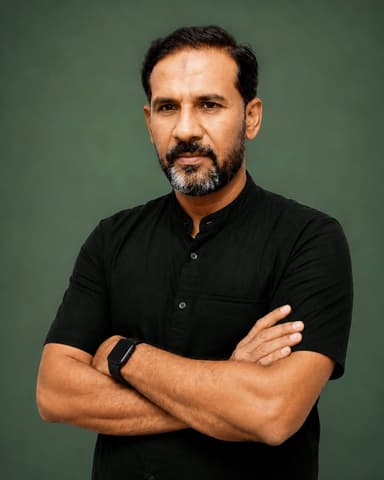
— Dr. Mohammad Zafar Iqbal MPhil Psychology · DHMS · Mind & Meaning Clinic, Lahore